
There he was, dressed in the sharp blue suit, bold red tie and the prom king neon white smile he is always wearing, the 33-year old man who recent polls put at 22% of the vote for the Democratic nomination for mayor of New York City, rousing a small crowd on Friday, at a socialist fundraiser at Umbra, a newish club in Bushwick.
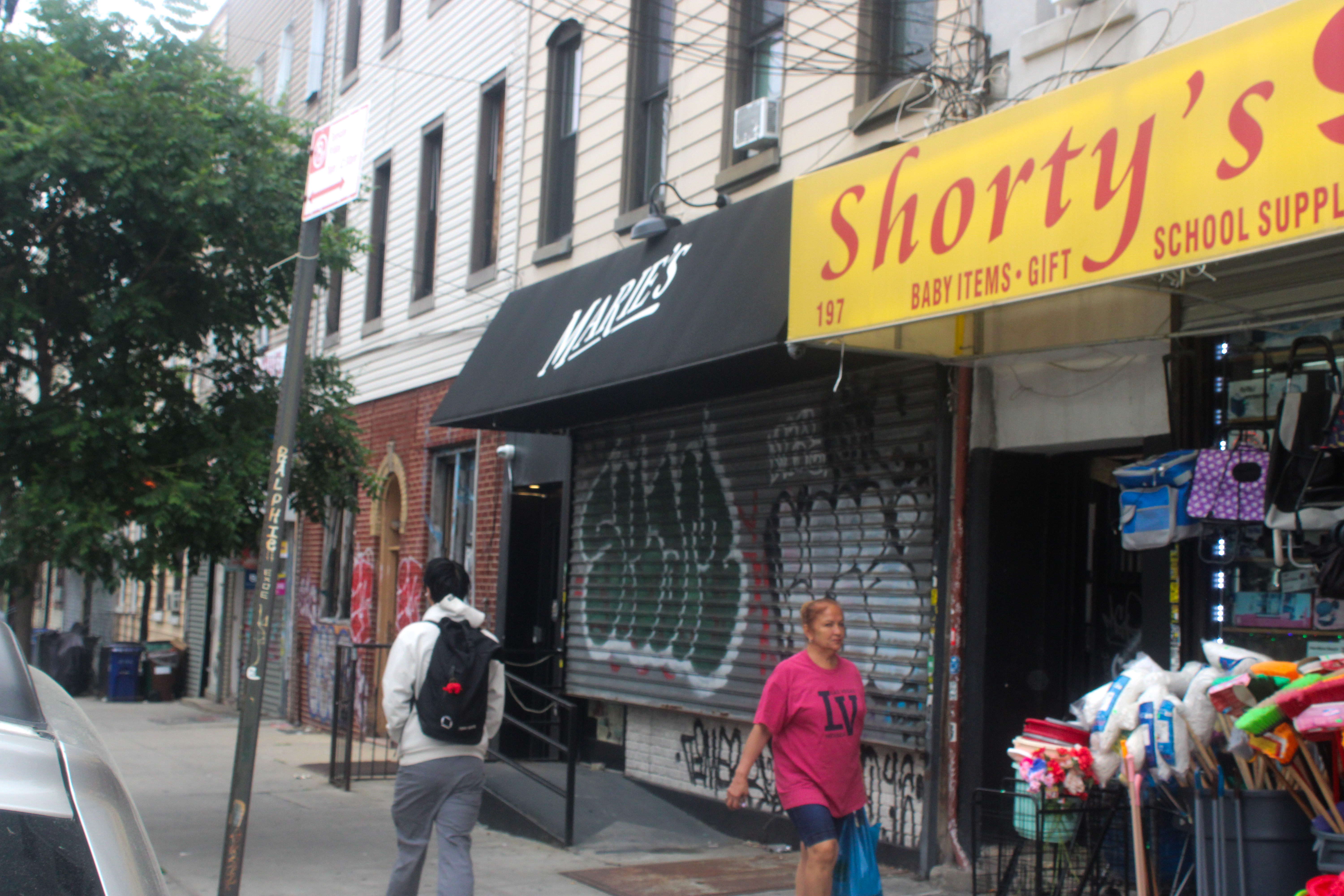
“What an incredible, incredible venue,” Zohran Mamdani told the crowd. On the nearby wall, his beloved Knicks were cleaning up their surprise conference semifinals victory over a badly damaged incumbent. It was hard not to feel a loose and vague symbiotic relationship in the air. The place was new too, opened on a relatively quiet, underused stretch of Hart Street by Zach Schepis and Jorge Guarch, a pair of white collar professionals who moved to the neighborhood and began playing in various bands. It was a fitting spot to find Zohran Mamdani, the once-New York rapper turned attractive mayoral candidate from Astoria. He had spent much of his campaign circling the north Brooklyn neighborhood, where his canvassers have been stationed at nearby Maria Hernandez Park for much of the year. A night earlier, Mamdani appeared at Xanadu, a fashionable skate club that opened last year on the other side of the neighborhood. At least one local Times columnist would label him the candidate for the city’s “cool crowd,” notching Mamdani appearances outside the Myrtle-Broadway M station, in a video with the local city councilman Chi Ossé, followed by a widely-reported showing on stage at a sold out MJ Lenderman concert in East Williamsburg.


The event was a fundraiser, not for the Mamdani campaign, which has made a meal of reaching its public financing campaign contribution limits, but for the political action committee, DSA For The Many. This was a group run by the city’s Democratic Socialists of America chapter hit last year with over $200,000 in fines, leveled over what has been called a “decidedly technical dispute” surrounding documentation filed to participate in the campaign finance system in the 2020 elections that swept Mamdani and few other socialists into the State Senate. “Every donation was disclosed. Every record transparent. But they’re still coming after us — not because of a violation, but because we’re effective. This isn’t about rules. It’s about silencing working-class power,” the group says on Instagram.
“I’m always asked the same question, ‘what do you mean, you’re a Democratic Socialist,’” said Mamdani on Friday. “And I tell them the same thing I was told in 2017, which is that this is an organization that puts working people at the heart of its politics.” The subject animated him. “This is an organization that believes that whatever any person needs to live a dignified life, that they should have that. It’s nothing that we should apologize for, we should be proud of that. It is not only something that is principled, it is popular.”
The crowd cheered. Among the crowd in Bushwick, Mamdani brought them a vision of a DSA with a larger and more prominent position in civic life.
“We started at 1% and now we’re at 22%, they say. That rise is not in spite of being a Democratic Socialist, it is because I’m a Democratic Socialist,” he told them. “The future of this city is tied to the future of this organization. It is an organization that, no matter what your issue is, DSA is fighting for your dignity. And no matter what your issue is, DSA understands that you have been failed by so many of the so-called experts.”
Among his more prominent and early campaign promises has been to commit to offering free public busses in the city, an idea that Mamdani said he picked up from a DSA member. (“Alicia, who some of you may know,” he said.)
“The thing that I love most about this organization is that it believes that the answer can be found in any one person… no matter what working group they are in,” he said, to some laughter.
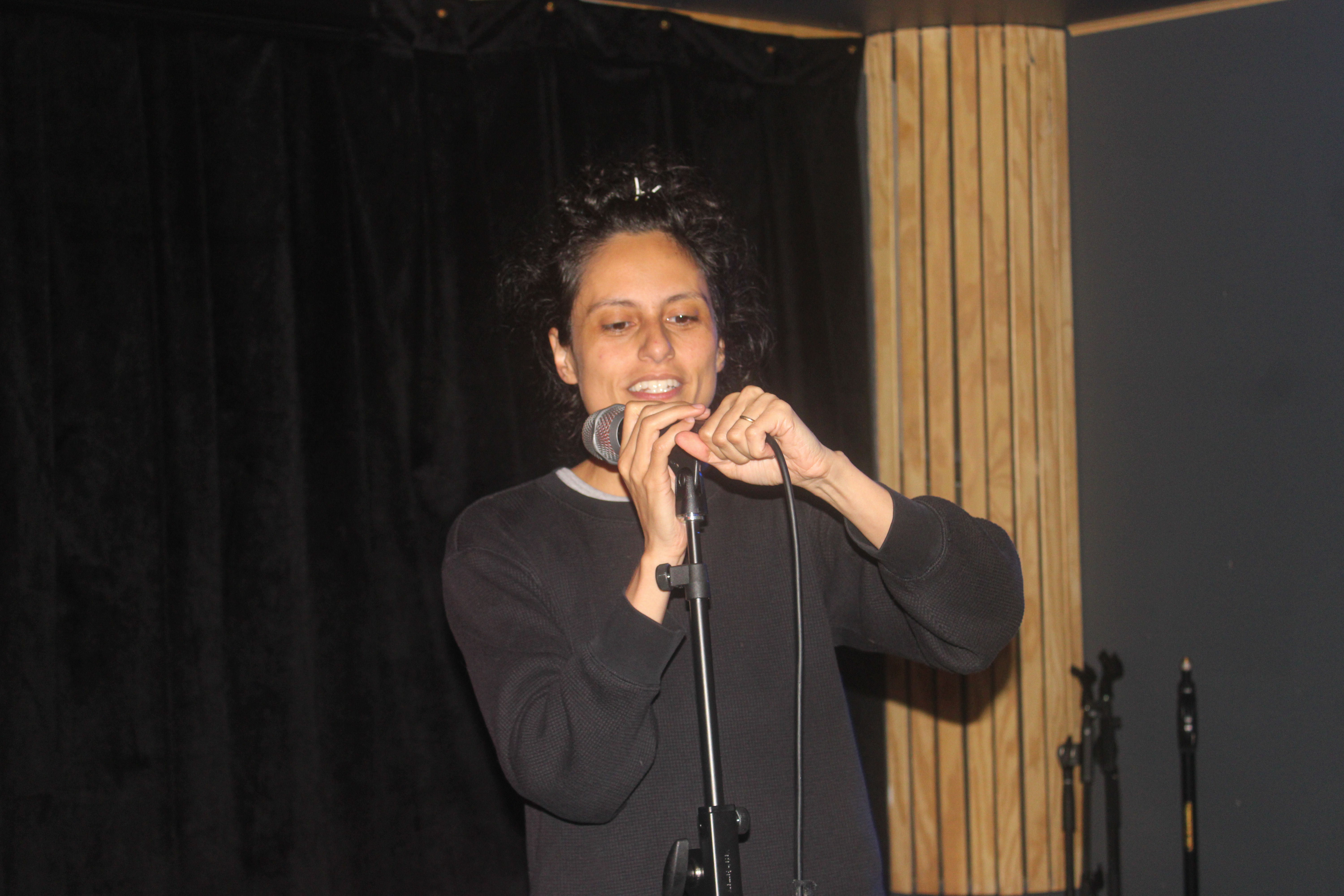
Julia Salazar was a socialist and a local state senator, but who was not running for mayor; she was elected two years before Mamdani and coded visibly more Bushwick, sporting a light denim jacket. What was on her mind, she told the crowd before Mamdani took the stage, was the vote by New York state legislators in 1919 to expel some five socialists who were elected there a year earlier, right after the end of the First World War. “They put them through a hearing, basically a kangaroo court that was rigged against them. It was post-WWI red scare hysteria. They said they were un-American and they succeeded in expelling those five socialists from the state legislature,” she said to a chorus of boos. “They buried us, but they didn’t know that we were seeds.”
In the crowd, people wondered when the city’s most well-known socialist, the Queens congresswoman Alexandria Ocasio-Cortez would finally decide to support his campaign, a subject of much popular speculation.
“I hope we can get the NYU students,” a contemplative veteran of a recent DSA state senate campaign, and a part-time pop culture blogger from New Jersey, told me at the bar.
“But the million dollar question is if they are registered [Democrats]” piped in someone else, new to the neighborhood from Westchester, a veteran of Jamaal Bowman’s failed reelection campaign. By some estimates the current closed primary system in the state prevents more than one million independent voters — about 21% of the electorate — from voting in next month’s primary at all.
These were issues on Mamdani’s mind too.
“The longer we are in politics, the more tempting it is to think that the people who know are the ones who always know. The people who are engaged are the ones who will always be engaged. But I can tell you, there’s a big world out there, beyond the politics-knowers. There’s eight and a half million people in this city and there are eight and a half million reasons why they do not believe in politics anymore. And that is eight and a half million opportunities to change them.”
New York City’s Democratic primary takes place June 24th. Early voting starts June 14.


Leave a Reply