On the third of May, this year, my apartment in Williamsburg1 burned to the ground and I lost everything I owned. The fire incinerated the building, flattened it to rubble, displaced eighteen people, killed two cats, and injured three firefighters2. I almost died. It was pretty upsetting.
I try not to dwell on it too much these days. But, it set two important things into motion: one is that I moved back to Bushwick. The area East of the residential grid swirling around Maria Hernandez Park. I moved in with a chronically unemployed Substack-writer who coincidentally lost his own house in a California wildfire years ago, and another roommate, who was self-admittedly unambitious. Both from the Bay Area, both so-not New York in nature.
I was, like them, unemployed. The rent was cheap. The historically Puerto Rican neighborhood was loud and rambunctious, but peaceful. The park across the street was filled with sweaty, tan shirtless boys of all colors playing ball all afternoon into the late summer evening. My thought was that there was no rush to become anything there.


The second thing that happened as a result of the fire was that I had to buy a whole lot of stuff. Seemingly endless shit. New phone, new bike, new laptop, new bed, new desk. New plastic bottles of pills for my head, new sheets, new towel, new underwear, new headphones, new passport. New apartments and new jobs were to follow, too, of course. New York is for newness, which is expensive.
I kicked and dragged my feet about buying new things. No one wants to spend an entire summer draining their bank account of tens of thousands of dollars replacing shit and stuff, especially a minimalist who just spent a year jumping around the world unburdened.
I spent a lot of time in New York retail. Is New York still known for retail? Probably not. Once it was Bloomingdale’s, it was Barneys, Tiffany’s. It was the plasticky TV sets in Will and Grace, the store that Jack worked at, once a signifier of the kind of job a gay man was allowed to have: retail. Glamorous, glittery, New York retail used to mean something.
Now these retail stores have gone the way of hotels and suburban malls. There’s the premium version, and there’s what’s left of Americana-inflected fetish objects. There’s a bougie and a creepy version of malls, Main Street USA-style small town downtowns, and the once iconic, palatial urban department store. I preferred the name-brand proper retail.
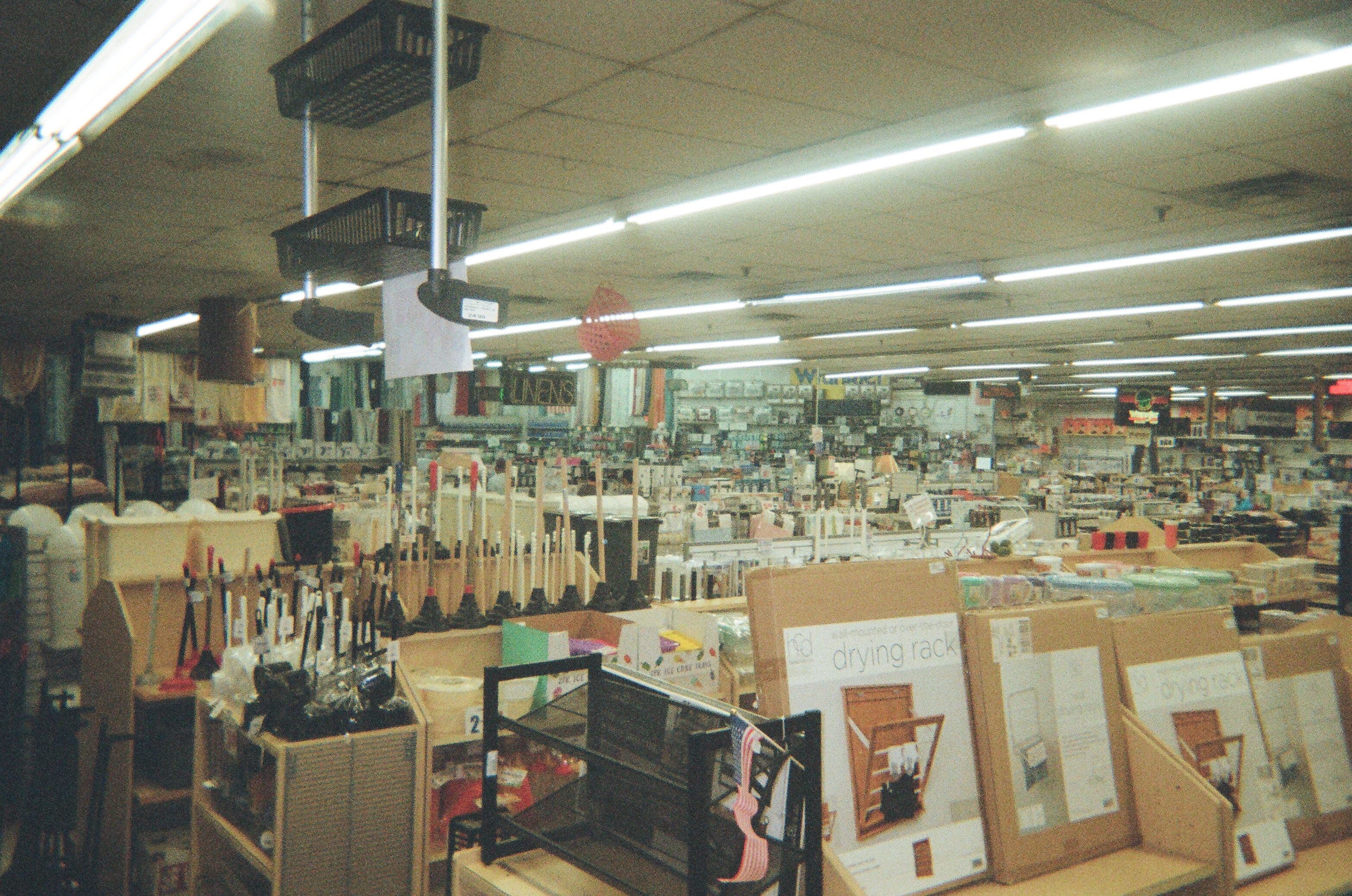
I blew my depleting money in nice, clean stores that smelled like Manhattan eucalyptus. I liked the capitalist-orientalist feng shui I could find in the Muji store in SoHo and the geisha-like hostesses at ScentBar and the Scandi minimalism at COS the best. I was comforted by luxury imports, by corporate recognizability. I didn’t like shopping in local stores, around me, in Bushwick and Ridgewood. Those stores were, associatively, The Backrooms, fluorescent-lit spaces that filled me with horror vacui, like the kind seen in Kane Parsons’ Backrooms, an A24 movie that came out earlier this summer.
Parson’s Backrooms is a tale of a psychologist and a furniture store-owner who descends into a nether-realm of non-euclidean furniture show-rooms, where they find themselves being chased by nightmarish dream-monsters in high octane scenes that resemble video games and YouTube videos.
Parsons, the movie’s director, has big dreams and bigger nightmares. The film has something in common with Japanese video game series Persona, a psychological action RPG about battling demons in ghostly Tokyo. Like the psychology-inspired Backrooms, Persona is influenced by the work of psychologist Carl Jung — there’s doppelgänger monsters, visually evocative dream worlds, and archetypal characters who transform into their Jungian “shadows” as a gameplay mechanic. The fear of the dream-place, the fear of so-called “Backrooms,” comes from a terror brought about in “liminal” public spaces, spaces that are hollowed-out and unoccupied by naught but the ghosts of humans now gobbled into cyberspace in a trans-humanist fashion. In other words, a lot of modern life is distinctly, implacably, creepy.


Jordan Peele’s movie Us takes viewers to a similar underground, mall-like labyrinth that imprisons the “Tethered,” who are Peele’s Morlock-humans, identical doppelgängers of every American. The Tethered are unseen, unheard, underground, put there for reasons that we do not know, other than that we know they cannot see their aboveground selves, us, who live freely, lest something murderous happen. Since it’s a horror movie, they rise up and slaughter their real-world counterparts in a blood-fest, a thriller with hidden messages about the idea of an American underclass “unseen” by Coastal Elites, enacting revenge on the bourgeoisie, the milieu that Peele grew up in, experienced all of the privileges of, and parodies often. The Tethered are tragic, subterranean-dwelling creatures that eat leporine flesh, and in the end, their freedom does cost us above-ground humans everything. Like in Backrooms or Persona, they’re plot devices, charmingly obvious metaphors, artwork that tells you that this is a manifestation of a national subconscious. Every place has its doppelgänger, every idea has its counterpoint, and New York is no exception.
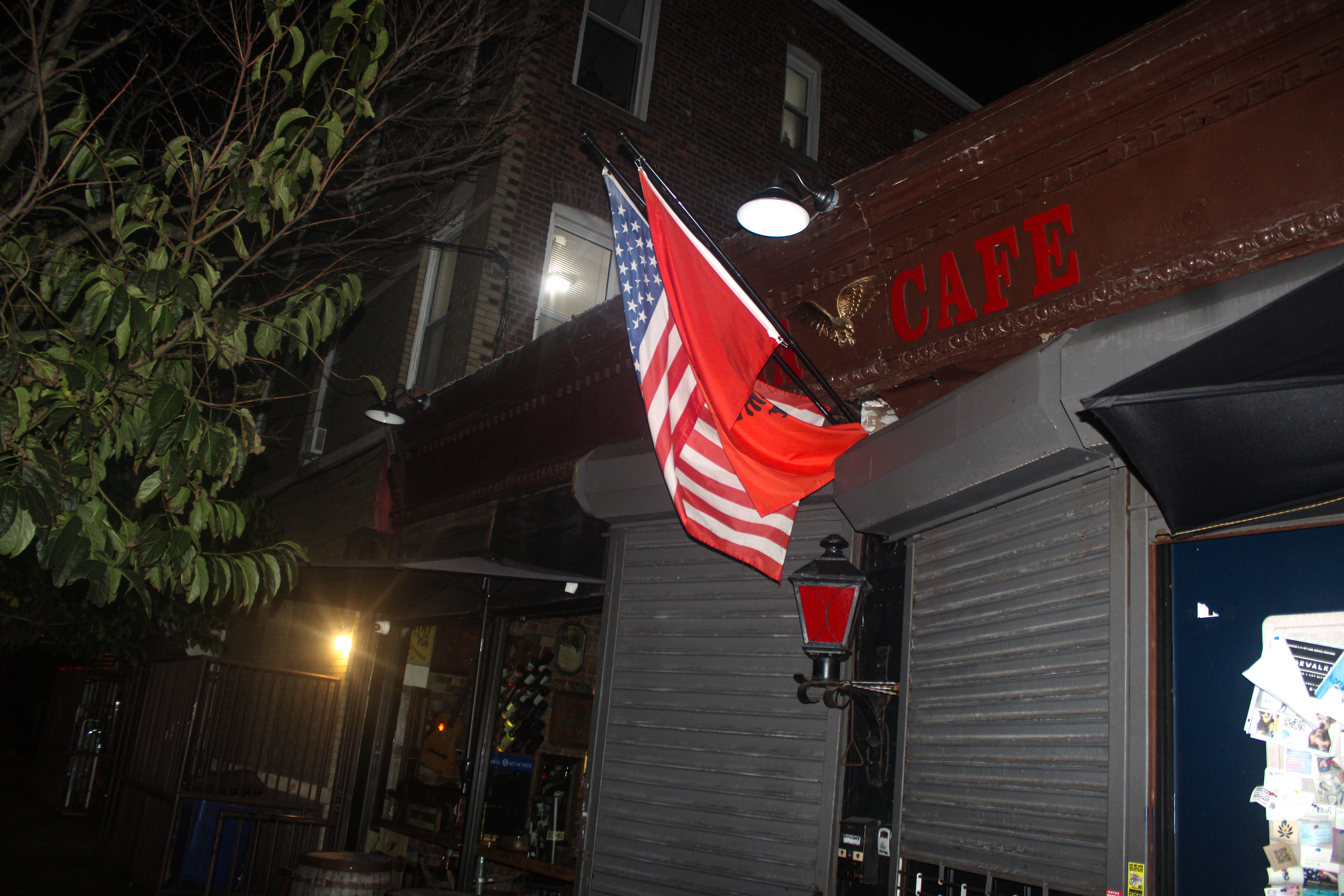
New York has its own backrooms, too. I was feeling trapped inside them in Bushwick and Ridgewood. Their liminality and status as hinterland rings indelibly quaint. My apartment opened up to a fire escape that hovered above an overgrown sea of grass where a scraggly black cat stalked. Like this cat, I would patrol the neighborhood in circles, finding its borders. Namely: cemeteries, train tracks, a pond, highways. It felt like a small town within a city, probably because it once was. I became familiar with the arteries of Ridgewood’s little downtown, the intersection of Fresh Pond and Myrtle. Walking down them, you see these endless department stores full of knockoff goods, with AI slop posters hawking their wares, selling AI paintings of Rocky Balboa and Muhammad Ali inside. Inside, they’re depopulated of humans, full of overpriced goods from knockoff mystery brands ordered from China.
To “shop,” or, waste my time, idle and flâneur all summer, I swallowed Pregabalin capsules to battle anxiety about my future, which put me in a pleasant trance. I felt like I was swimming through the thick summer air in Bushwick, thick like the FroYo at the FroYo/Sushi combo place off of Myrtle. Then I wandered store after store looking for… anything. Christmas lights? Furniture that I would actually want in my room?The security guards would keep checking my bag when I walked inside. Why would I steal any of this crap? I could just order it on Amazon, anyways. But going into these stores was about the retail experience, for me, which I prefer over online. I wanted to get the brick-and-mortar experience, and I did. I went on a journey and saw the ghost of America.


“Liminal horror,” to me, is not just the creepy empty showrooms of dead retail that look cool in photos, and remind me of movies. Liminal horror, to me, is being trapped in my own state of transition and inbetween-ness at all times, and is the fear that I could settle somewhere, for once, after these years of bouncing around, and I could buy stuff, and then it could still all be destroyed in an instant.
Or, I could wake up one day, look at all that stuff I bought, realize I hate it, and destroy it myself.
Or worse, not destroy it, and just sit there, living a life with a bunch of stupid stuff I hate. Stuff that churns and froths in my subconscious basement, unhappily, until a single spark caused by friction ruins my life in an incendiary climax.
Maybe there’s real truth in the notion that a life is built with material things. Of course it is, of course your life is the stuff you produce, not just your ideas, your digital content you excrete into omnipotent, omnipresent cyber-space. Maybe bespoke artifacts and goods are all that matters in an age of digital counterfeit, the death of content, and a dearth of soul.
But I choose to not believe that. I want to own nothing and be happy. You can’t really do that, but I tried it, and then I lived it; I owned nothing, for a moment. I liked it. It’s easy to love a life on fire. To quote Clifford Odets: Any idiot can handle a crisis — it’s day-to-day living that wears you out.
This ghost story has a happy ending. It was actually a really pleasant summer in Ridgewood. The area had quickly become one of my favorite neighborhoods, having spent six months there this year, winter and summer, and it is one of my favorite places I’ve ever lived, next to Echo Park. I was biking around the Ridgewood Reservoir when I received the text that I got a job and it would be taking me closer to the city, propulsion just sort of flowing into my life naturally and spontaneously. So, not bad at all. Once you look past the cinematic sheen, you see that liminal places aren’t evil, just lonely, and in search of occupants.
Charlie Herndon is a writer who moved to Bushwick at the beginning of this year, even though part of his appeal is that he moves around a lot. You can see more of his photography on Instagram.
Photos by Charlie Herndon.
- The apartment fire took place in East Williamsburg, which is a real estate term. It doesn’t mean Bushwick. This apartment was not in Bushwick, it is not neighboring Maspeth, but it also probably isn’t “real” Williamsburg, except it is. ‘East Williamsburg’s deployment as a proxy term is in efforts to rebrand a once-undesirable area. It is, and for a long time has been, an area of industrial warehouses, workshops, storage facilities. The housing that is there, squeezed in between tire shops and fabrication houses, like my refuge for artists was, is old, unsafe, cheap and ramshackle. And highly flammable. The area is prone to fires, and the artists studios and lofts there are there to draw in yuppies, working professionals, and millennials and high-income European artists because that’s who lives in Williamsburg now, Instagram-Americans, and it is well-positioned on the L-subway line. Gentrification marches on, there more successfully assimilating it than in Crown Heights or Bedstuy. At least, on the surface. In reality, as foot-soldiers of gentrification such as myself push deeper into the outer boroughs, we’re confronted with the foreign, alien, and unknown. The possibility that what’s out there just isn’t for us. ↩︎
- The fire may or may not have been arson on behalf of a real estate developer, or maybe it was a result of e-bikes exploding, bungled together in the basement. I will never know, which is chilling, what seems like it should be a very pressing mystery that haunts me in my life, and should disturb me more than it does. Either way, it also chilled me, it’s indicative of a different societal rot and jaundice, either classic New York real estate corruption or Americans unable to mitigate the amount of stuff they amass, cheap goods from China, not built to last, like our apartment couldn’t. ↩︎


Leave a Reply