“The name just needed to go away,” Michael Lombardozzi told me. He was deciding, he said, to reopen the bar he already opened nearly a decade ago on Irving Avenue. Then, he had called it Dromedary, a name that lent itself to a loose tiki concept; drinks served in inflatable flamingo cozies and novelty, culturally appropriative mugs, sometimes lit on fire for dramatic effect. Lombardozzi had found an old catering hall, just blocks away from the Myrtle-Wyckoff train station, and had laboriously turned it into an expansive bar that became a lively headquarters for nightlife in this corner of Bushwick. After making it through the pandemic, Lombardozzi decided he was going to sell the place and then open up shop in a different corner of Bushwick. And then he did.
Now, he’s back. And it’s not Dromedary anymore, it’s Merv’s, a name Lombardozzi thought of by combining the names of the intersecting streets of Menahan and Irving. (“It sounds like an old guy’s name that you go over to his house and play pool with. Grandpa Merv. He’s a nice guy, though. He’s not a bad guy.”) Despite an early Instagram post depicting Al Bundy from Married… With Children advertising a showing of the recent Super Bowl, it isn’t exactly a sports bar with TVs hanging on the walls. “We’ll bring it out for the big games,” Lombardozzi promises.
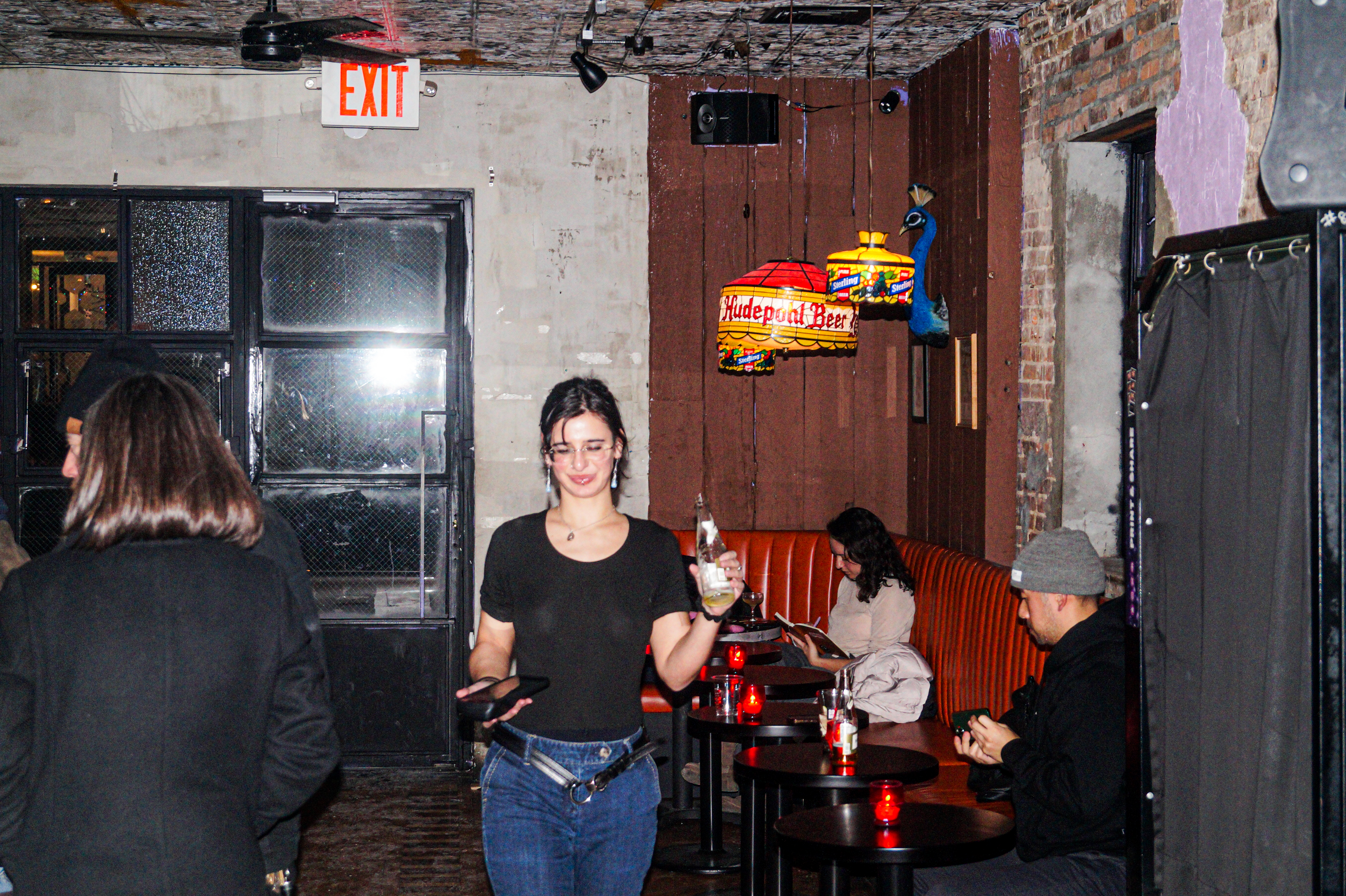
“The vibe is somebody’s grandparent’s basement in midwest Wisconsin… or maybe Ohio,” Lombardozzi tells me. Knicknacks abound. Behind the bar, VHS tapes are kept running in the background, playing on “those classic kind of TVs.” The tiki drinks are gone and have been replaced with a line of recognizable $13 cocktails; espresso martinis, a grapefruit paloma called “Something Familiar.” The best of these is the simple martini, which comes “super cold,” heavy on vermouth and with gigantic, juicy olives. A friend of mine already calls it “the most perfect martini in Bushwick.”
Longtime Dromedary regulars will spot some familiar things on the kitchen menu, if not by quite by name. The trays of shoestring fries, indelibly some of the best bar fries in the neighborhood, remain. Instead of coming “flamingo” style, they now come “mountain” style. “The flamingo sauce is now ‘Merv’s sauce,’ which has a lot more horseradish in it,” Lombardozzi tells me. He also now puts chorizo on top of it.


Lombardozzi talks about these changes with the air of someone therapeutically letting go of the past. “A lot of things went badly in the last few years,” Lombardozzi tells me at one point. There had been a break-up. He had taken the Dromedary name to a storefront closer to the Jefferson L station, where he opened a novelty donut shop. He had opened a cocktail bar there too, called Ra Ra Rhino, which he operated as a kind of vaguely hunter-themed speakeasy concept, packed behind a fake phonebooth. It eventually did more business than the donut shop, which Lombardozzi freely admitted had become a “money pit.”
The old bar had been, in a colorful sort of fashion, taken over by his former bartenders, namely four of them, who had renamed the place “Dromedary: Coming Out,” described as “a colorful, collectively-run queer space” in a complimentary write-up in the Brooklyn Paper. With its enormous David Bowie mural overlooking Irving Avenue, and the overall kitschness of the tiki concept, Lombardozzi’s bar had “slowly became a de-facto queer space,” as the the Paper puts it. Before the pandemic, the bar put on one of the more popular of the neighborhood’s drag brunches. The quartet who took it over had touted the move as a gesture in the direction of creating a communal space, perhaps even spiritually detached in some larger sense from the business of selling elaborate cocktails. They sold off all the elaborate tiki mugs. A tall metal pole, brought in for “dance and burlesque performances” was installed. Behind it, rainbows were painted on the wood panel walls and the menu started featuring something called the “Horny Meal,” which combined a burger with a sex toy of the customer’s choice. A publicist was hired.
“They completely transformed it into a queer event space and, unfortunately, the economy is not really designed for that kind of exclusivity,” Lombardozzi says. As he puts it, the group came back to him last year and told him they wanted to wash their hands of paying to keep the bar running, or running it themselves. “We’re so sad to be closed, but community stays strong,” they wrote in a Notes app farewell post on Instagram last year. In their penultimate post, the bar is full and someone with a beard is standing on the bar, wearing a kilt and playing bagpipes. Individual members of the group didn’t return a request for comment and have largely stayed quiet about the end of their business. Since getting the keys back, Lombardozzi says he “hasn’t heard from them.”
“It was busy, but not a lot of people were spending any money there,” Lombardozzi recalls. “It was a really genuine attempt to make that space very inclusive.”
Online, Lombardozzi wrote in a Kickstarter post that he didn’t “think I can reopen Dromedary without making some needed aesthetic alterations.” The burlesque dancing pole was pulled out, as were the rainbow-painted wood panels, revealing a hearty exposed brick. The back pleather seats were replaced with a subdued Cheers-coded orange. The somewhat sudden change encouraged an amusing range of reactions online. “Degayifiying this space is a really bizarre selling point,” read one comment. “What is this hunny,” asked another.
“I’ve got people saying, ‘it’s a sports bar, how is that inclusive’? I don’t know how that makes anything not queer? It’s such a strange hill to die on,” Lombardozzi tells me. The quartet of former bartenders weren’t interested, he says, in coming back as employees. “I didn’t want to continue something that I wasn’t part of,” he says.
“It’s very confusing to me because I feel like I’ve done something wrong, taking the place back. They didn’t want to work for me [anymore] anyway,” he says. “I thought I was doing them a favor by letting them not have to deal with this space anymore, and I’ll just take it over and I’ll ruin my life again.”
Lombardozzi says the drag brunches “might come back” too, but thinks it’s not up to him. “I feel like they’re not going to come back to … what people are considering a ‘straight-guy bar.’” Personally, he disputes that characterization.
“I’m not a ‘straight’ guy. I’ve been in the queer community for years,” says Lombardozzi. “I don’t consider myself a straight guy. I don’t label myself as anything.”
What Merv’s is about is not hetrosexuality, per se. It’s about the old TVs along the walls and the stacks of anonymous ‘80s VHS tapes filling a cabinet, the walls lined with photos of singing guitarists and Ernie Pantusso. It’s about stiff drinks and happy hour specials, a burger that is “not smashed,” Lombardozzi insists. It’s in the beer-colored stained glass chandeliers and the underused pool table. Like the grapefruit paloma, it’s something familiar. It reminds me a bit of Bad Old Days, the elevated dive that opened some years back in Ridgewood, or maybe Aunt Ginny’s, or maybe the Juke Bar, a new wood-paneled, vaguely Irish cocktail bar that opened last year on Troutman street. On the walls of these places, old-timey memorabilia from the last century are hanging everywhere, vintage quality.
These days, it can feel like every Bushwick bar is trying to feel like a basement in Wisconsin, like the nightlife of an entire neighborhood of e-mail artists are communally prepping for the coming doom of the years to come by hiding in misremembered iconography from the home they came from. Bottoms up.
Merv’s is located at 266 Irving Avenue.
Photos taken by Andrew Karpan.


Leave a Reply