Nearly a century before it was a Rite Aid, it was the newest branch of the Manufacturers Trust Company, a consortium of banks based in downtown Brooklyn that was, then, among the country’s largest banks. In the years before the Great Depression, the bank was snaking its way north when it acquired the Ridgewood National Bank of Queens in 1921. The trust carved its name into the granite below the Beaux-Arts facade as the savings and loans of the world were about to fall all over them.
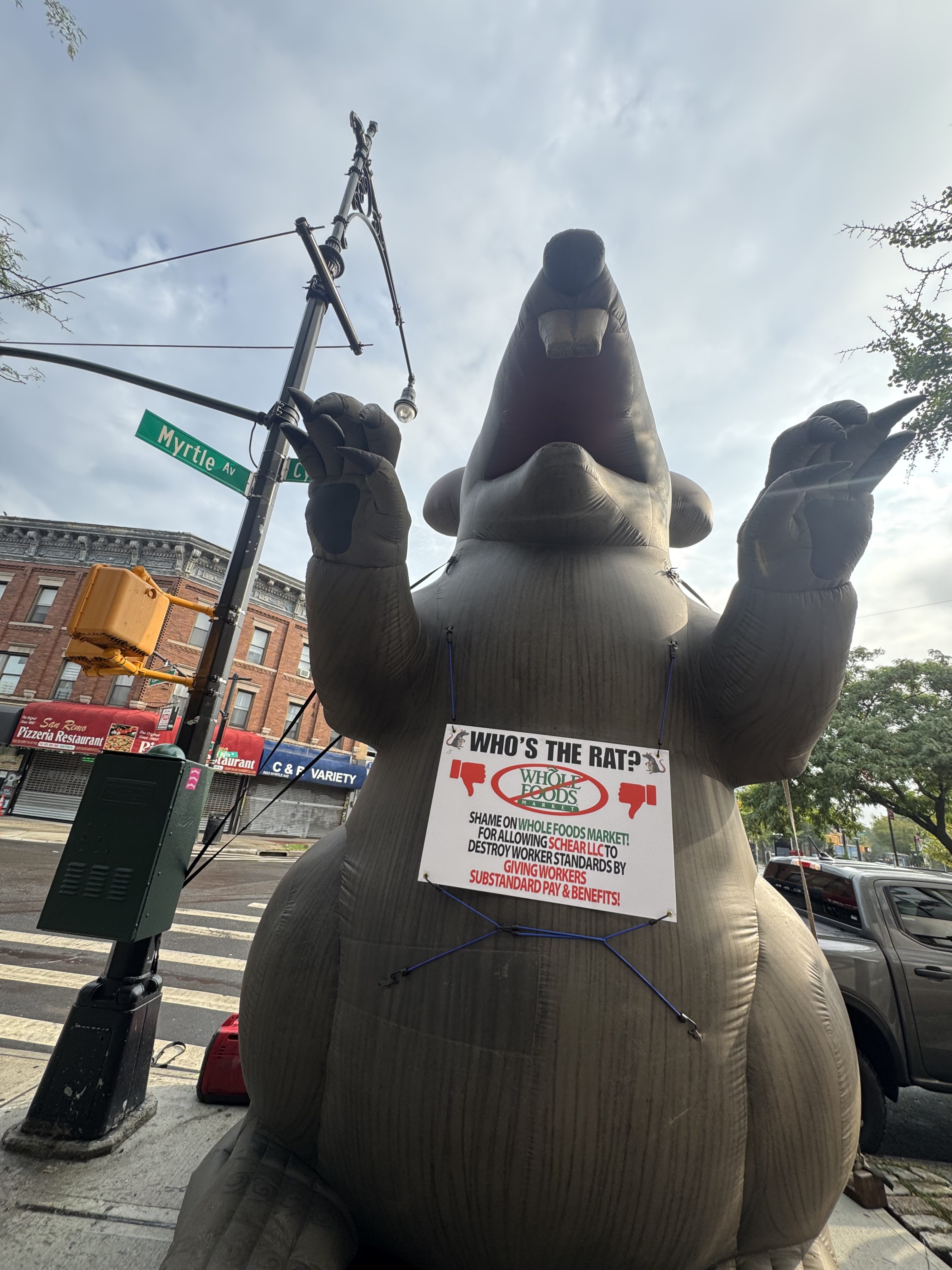
Now, it will become the latest branch of another empire snaking its way into Queens: Amazon’s Whole Foods retail operation, which quietly signed a lease back in October. News of the lease spread to the real estate trades a few months later, and then spilled into the New York Post a day after that. Under a stock photo the Post supplied of an empty supermarket read the caption: “Ridgewood residents worry the new Whole Foods will usher in gentrification.” The statement is portentous, even if it already feels half a decade too late, already missing the arrival of the Jermey Allen White-approved burger and the craft beer distilleries, after the neighborhood voted resoundingly – in some election districts by more than 90% – for Zohran Mamdani.
Nevertheless, this has a kind of grand geographic significance that seemed to stretch into the neighborhoods surrounding this newly crowned capital of mid-level retail. Per Crain’s: “None currently exist east of Williamsburg in North Brooklyn or Gowanus in South Brooklyn, creating a very distinct dividing line down the center of the borough, according to a map of Whole Foods locations on the company’s website.” It was good to know that someone was waiting for these stores to fill this space.
The arrival felt, in its own way, significant. The news arrived like a waved flag or smoke signal. A periodical warned of the “Whole Foods Effect” surrounding the arrival of these stores; according to research dating to 2021: “Communities with a Whole Foods on the ground floor achieve, on average, a rental rate premium of 5.8 percent above comparable apartment communities in the immediate local area.” Other grocery stores – real estate consulting firm RCLCO cites names like Sprouts, Fresh Thyme, Harris Teeter, and Fairway Market – drove up local rents by “a lower but still meaningful premium of 3.3 percent.”
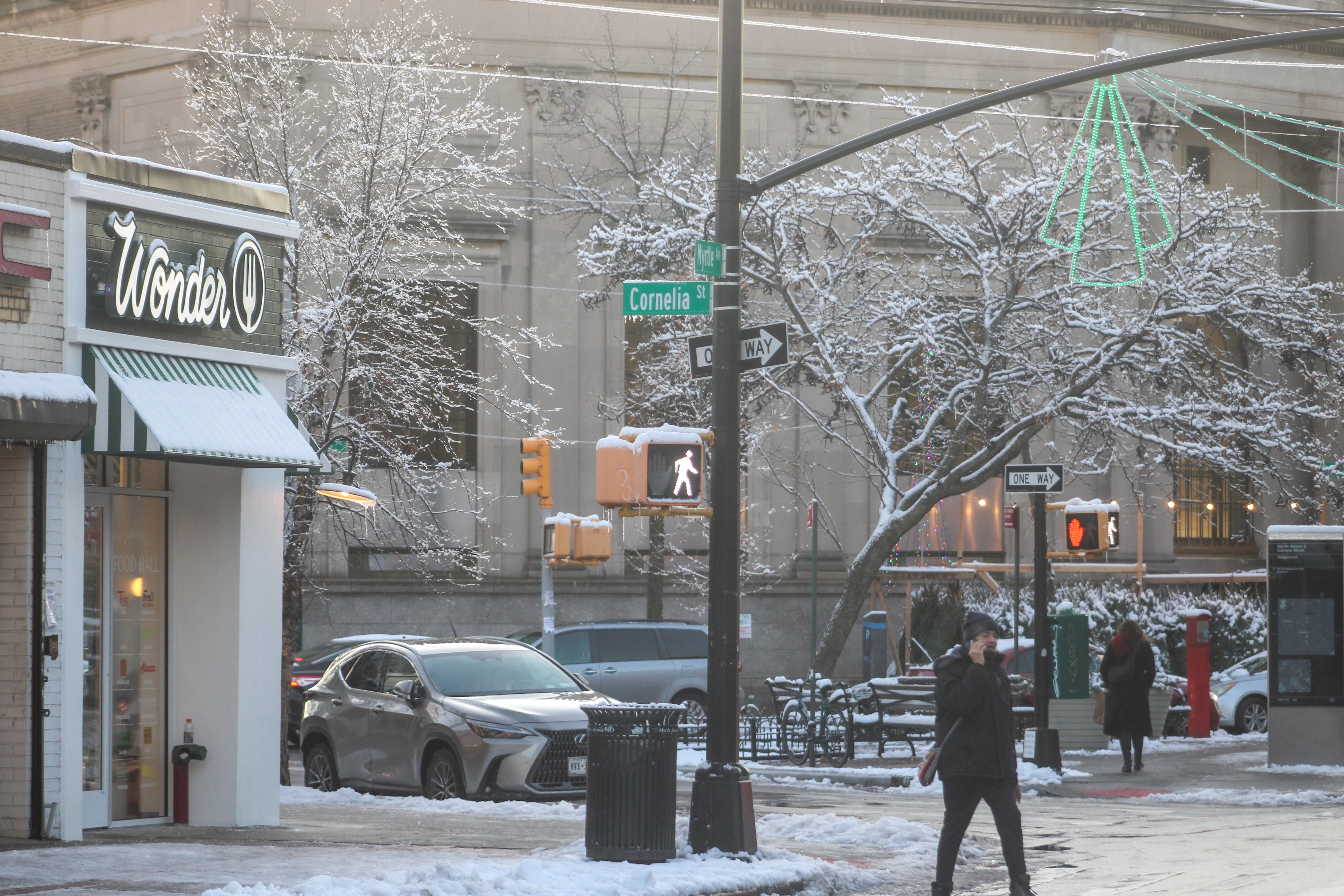
“A Ridgewood Whole Foods… It might be over in ways I’ve never thought possible,” read a Twitter user quoted in the Post. A different post appearing in the same story used the word Brooklynization. The future Whole Foods signified what everything around it had only hinted at; the incomplete Burlington Coat Factory under the never complete Ridgewood Tower, or the Wonder across the street, a ghost kitchen chain dreamt up by an ambitious Walmart executive that aims to compete with the ambiance of local cafes with the atmosphere of an amusement park bathroom filled with an illusory food court of options, some endorsed by celebrities like Bobby Flay. Something was happening everywhere, but especially here.


Over the weekend, at a dinner party a few blocks away, a graphic designer who dreams of being an actor and is self-conscious about being 38 told me that he was excited about the coming Whole Foods. Everyone had been sharing the link from Crain’s story. He tells me that he’s looking forward to finally having somewhere he wants to shop.
“Food Bazaar, they’re not even local,” he says about the popular chain of enormous grocery stores started by Francis An, a Korean-American businessman who aimed his concept at the disparate ethnic enclaves of immigrants that filled the city during the late ’80s.
Whether or not An’s retail fiefdom, still based in Brooklyn, was a more local concern than the hip Austin chain that Amazon bought in 2017 didn’t seem to matter very much to him, or ultimately even to me, because what he was talking about was something different; the way that Whole Foods felt local because it felt like the other Whole Foods we had been to before and the way that the new one would become like those places too, in a way that the neighborhood’s grocery stores has not yet been able to.
Somehow, this particular corner of Ridgewood somehow had two of An’s jumbo-sized grocery stories, both flanked by enormous parking lots. Other grocery stores in the neighboring blocks include both a locally operated Key Food, and a C-Town, the latter run under the more upmarket Billy’s brand. Like something vaguely contagious, recent years have seen the opening of a Citfresh, a Met Fresh and yet another C-Town in other corners of Ridgewood.
“Yeah, I don’t want to go there,” the 38-year-old video editor says about Food Bazaar, but he might as well be talking about any of them. There was a yearning for something he already knew. The party’s host, an email marketer moonlighting as a stand-up comedian, tells me her building’s largely dormant groupchat had already sprung to life at the news. “Where is our Just Salad, when is Chipotle coming?”
It is certainly true that Ridgewood has been asking for this, or at least some have been asking for something like this. In a Reddit thread surrounding the Rite Aid closure, user dksa wrote: “I would do depraved[,] despicable things to my body in celebration of a Trader Joe’s appearing there omg.” Someone else had posted a link to a form to request an arrival from the California chain. (A more recent thread on the same page reads: “How Can [W]e Protest/Fight for [T]his Whole Foods to Not be Built”).”
“Many of our followers would have preferred a Trader Joes,” the anonymous Ridgewoodqueenz, an Instagram account1 that mainly complains about local graffiti, said when I asked how excited they were–who ever they were–about the prospect of a Whole Foods appearing suddenly here. Nevertheless, whoever they were, they were also unsatisfied by the abundance of grocery stores in the area, which weren’t the kind that the account owner liked.
“Look at Billy’s which tries to pretend to be a local business under C-Town. Overpriced and not good quality. Everyone is very excited,” said the account owner, an assuredly self-promoting blowhard with the personality of a real estate agent2. It’s hard to argue with the democratic logic of “We deserve better.” Was this not the future promised to us by our tech overlords, paying the lowest possible price for absolutely everything and having it delivered in pleasant lighting and preferably in English? Taken to its logical extreme, it’s hard not to argue that the gentrified city is a better one, and so what, perhaps, if the beloved Nepalese grocer down the street takes the eventual fall so transplants from California can buy the same bags of nuts they remembered buying at home? The politics animating resistance to the larger, encroaching Whole Foods concept, so much as it exists at all, suggests that withholding luxury grocers is somehow a way of preventing any of that from happening, as if the problem were not simply that there is no safety net at all, not for the Nepalese grocer or anyone else at all. Surely we all deserve both the revolution and a Whole Foods.
Like many who moved to the neighborhood in recent years, the anonymous instagram account was also taking some responsibility for welcoming the Amazon chain into the area. “Top neighborhood by Streeteasy, world’s coolest by TimeOut New York. And ofc course our instagram page [helped] too,” said the account owner about their power (5,000 or so followers).
“Honestly just not surprised anymore, this neighborhood been gone gone gone for years already,” says a friend of mine who has lived in the neighborhood her entire life, just blocks from my first Ridgewood apartment back in 2018. “I like Whole Foods too, so I’ll prob[ably] still go,” she says.
Back at the dinner party, a tenants rights lawyer who owns a condo in the Upper West Side told me that it wasn’t the locals, whether they were new or old, who were to blame for anything. It was the landlords, the bigger market forces at play. And no matter what, in his experience, neighborhoods still tend to retain something, even when the condos now tower over them and the streets are filled with people who are different from the ones who lived there before. Something would remain, the hidden spark that retains Bed-Stuy’s brick brownstone wonderland, or the perpetual rusted-out fire escape that hangs over even the most expensive condo. “Only when a Lululemmon comes, will we know that everything that was once here is now gone,” the lawyer promised.
And yet, it was hard not to think that the imminent arrival of the Whole Foods meant something, even if there was still time, even if there was at least one more generation of shuttered music venues before the streets would look like Williamsburg or Long Island City. (Williamsburg just got a second and a Whole Foods is expected to land in LIC by 2028.)
“Excited to charge 6% higher rents?” I ask the owner of the anonymous Instagram account, but whoever they are, they don’t bite. “Excited for better groceries that isn’t [sic] overpriced,” they retort, an answer that could have come from the plank of Mamdani’s election campaign. Fair enough.
Somehow, I end up talking to an urban planner at the party who says she is writing a story for an urban planning trade magazine about Wonder’s ambitious moves in the real estate sector. Earlier this year, Wonder was opening new stores around the country at a rate of one a week. They were buying distressed real estate or distressing the real estate markets or something about the decline in the profitability of traditional retail space or something like that and the apparent popularity of Wonder has signified something too. She had tried it, at any rate. She had to, she assured me, and it was mid, that was just it, resolutely and accomplishedly mid.
It reminded me of something that a Polish restaurant owner in the neighborhood complained to me about when I interviewed him a month earlier. He was opening a new cafe up the street, a brick-and-mortar debut for the celebrated pop-up he started with his partner in Dekalb Market Hall. It was the kind of sweet thing that a well-meaning food blog would pay a blogger to cover after laying off most of their staff again (appreciate it!!). He was also complaining about Wonder, though he was mainly concerned with the thin the margins in his own business of selling imported Polish novelty goodies to this ambient group of educated professionals. “People who are complaining about new places popping up in Ridgewood, they’ll be the first in line at Wonder,” he said.
The next morning, snow fell. The host–the one with the job marketing emails– tells me that the building’s groupchat was lighting up again, this time over a video of a car accident in the parking lot of the Food Bazaar. A car had crashed into it. The lights from the police cars felt foreboding in the morning air. The police always come quickly here. Whole Foods would be right behind them.

- I inquired, to no avail, as to the identity of the page owner, who has made it their business, for reasons unexplained, to nominate themself, whoever they are, as a major voice of the community and a cheerleader for the neighborhood’s newcomers. I had offered, even, to write about one of the page’s pet complaints, like the graffiti or the street vendors who work Myrtle Wykoff Plaza. Alas, they didn’t bite. ↩︎
- Perhaps that was best for all involved. But I will take tips on that question at: andrew.karpan@gmail.com. ↩︎


Leave a Reply