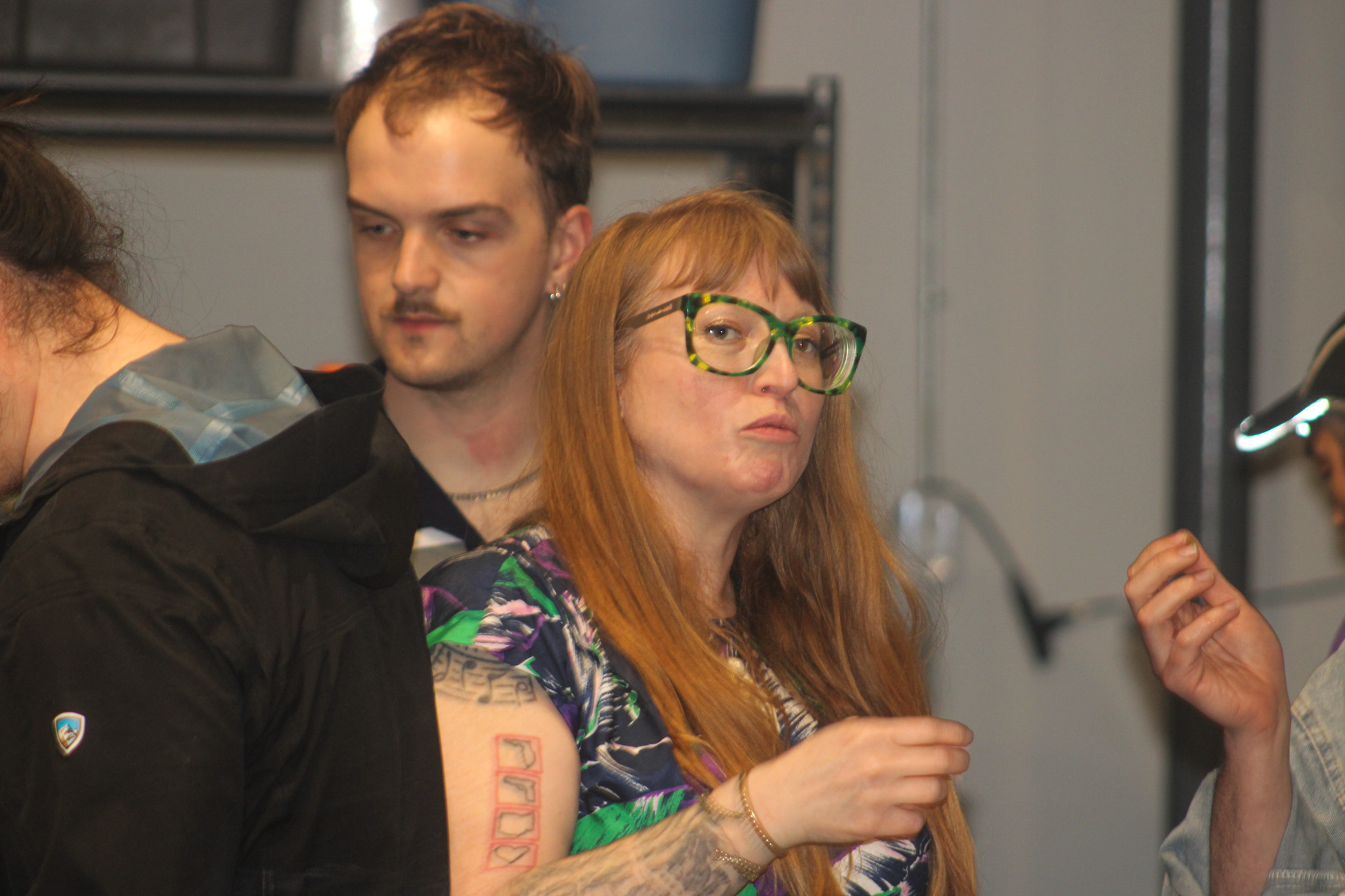
“Oh, these are new and they used to be in the backrooms of the Met,” the impossibly named Vanessa America tells me, waving to the enormous shelves that now fill out a corner of the newest address of Tiny Arts Supply (now 6-12 Woodward Ave.), the quixotic art supply outfit she’s been running in the area since 2021.
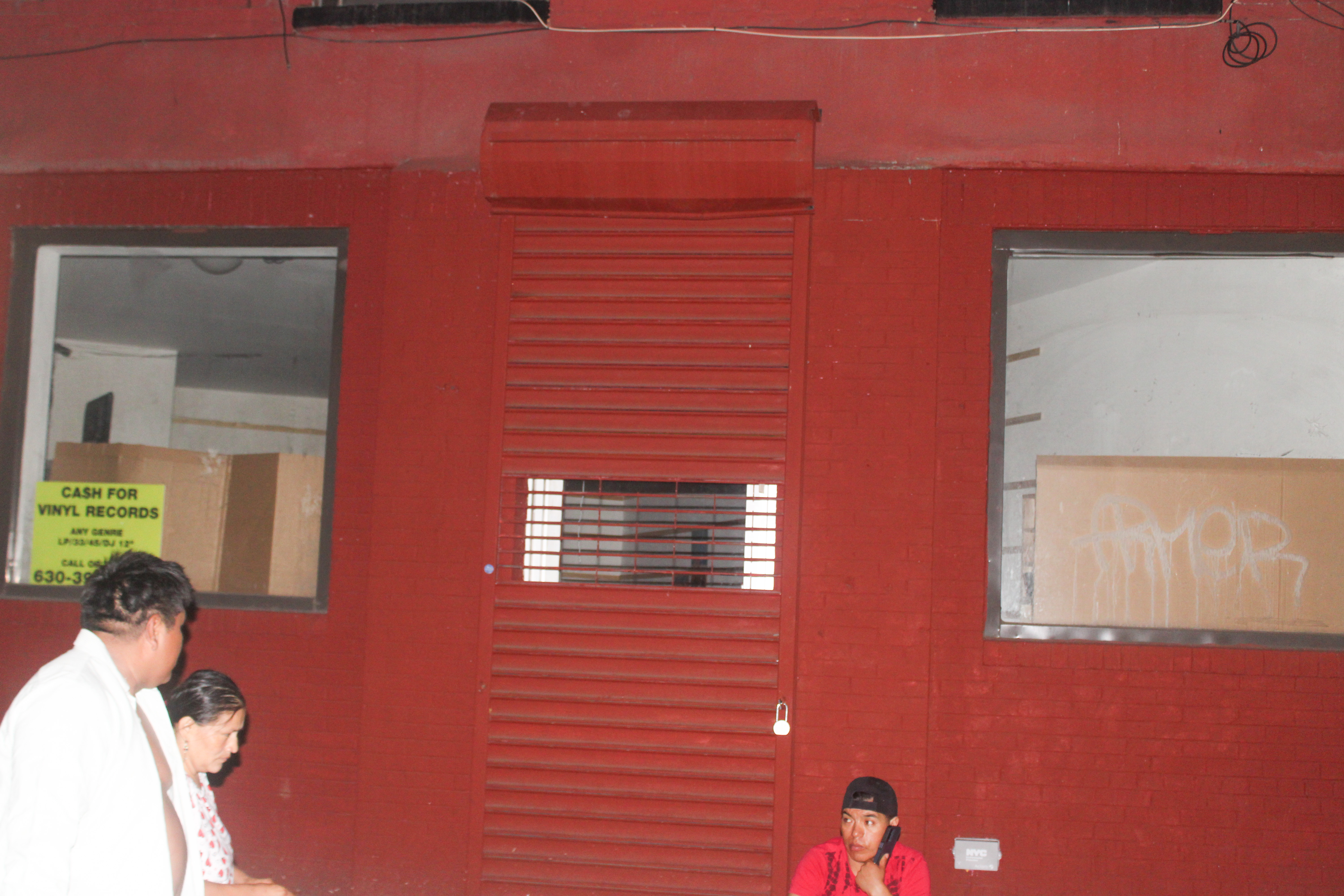
“When I saw that Whole Foods was opening, I got very nervous,” she told me while opening the doors on a different address, further down Woodward Avenue, where she’s renting out a spot that was once a storefront ministry called the House of Worship Christian Church.
She had looked up the place when scouting for an address to locate Ridgewood Commons, a local anarchist food distro she’s a part of that has since split off from the more Internationalist-focused Woodbine, following a traditional anarcho-leadership structure standoff that resulted in the latter finally fleeing the neighborhood for The City. The newly-named Commons stayed across the street. The ministry had departed some years ago and America jumped at the chance to lock in a ten year lease.
“Rents will go up,” she worries. “I think this is an intense destination for Whole Foods. Why didn’t they open in Glendale or Rego Park?”


For whatever reason, the move also puts her right in the center of what she calls the neighborhood’s nouveau “art strip”: a handful of blocks centered around an initial patchwork of art studios like the Conduit (6-59 Woodward Ave.) as well as gallery spaces occupied by newer transplants, like the Canadian conceptual sculptor Lucy Pullen, who has recently taken over a nearby lamp store (5-63 Woodward Ave.) and told an alumni magazine that the area “feels like the North End of Halifax.” I’m unable to disagree.
The scattered few blocks also boast a new pottery studio, Scratch Ceramics (6-58 Woodward Ave.) as well as the offices of KarlssonWilker (6-82 Woodward Ave.), a design studio run by a pair of Europeans. It also has Aunt Ginny’s (6-52 Woodward Ave.) and Left Field (6-57 Woodward Ave.), a seller of expensive, country-adjacent denim.
The old spot was only 240 square feet, and the new one was 1,200, says America. There’s a backyard too. Though the store is historically not open very often—“I have so many friends. I don’t really have any employees”—she promised that the number of varied, ticketed classes she also uses the spot to operate will only increase. She recently secured a $10,000 loan from the Women’s Enterprise Action Leadership Fund (“no interest and no fees,” she tells me glowingly). More materials are coming.
“I’ve already doubled the programming,” she says. “Right now, I have this Armenian needle lace workshop. I have a design-your-own-frame ceramic workshop and there’s a puppet-making workshop every week in May. The first is already sold out.”
She’s also still in the matchmaking game, running a branded speed dating business out of the nearby dive Willows (64-18 Fresh Pond Rd.). “It sells out every time, it’s really vibrant, it’s very needed in the community,” she says, telling me that someone told her they did their graduate thesis on her speed dating sessions. She’s waiting for them to drop off a copy.
“There’s been so many relationships. There’s been several relationships that have been over a year and there’s a lot of few-monthers.”


America tells me that she remembers first opening up shop to sell paints, pens and other kinds of art supplies amid the pandemic. The Art Cove on Myrtle Avenue had closed up shop five years before, and she felt like there weren’t any other art stores left in the area, though things have changed since: Cleo’s Yarn Shop opened up a second Ridgewood location (16-93 Grove St.) this year and she’s already begun negotiations: “Cleo and I are meeting to talk about how we can collaborate together, rather than compete. I’ve known them for years. I try to work with all the local businesses,” she says.
In Tiny Arts, Aleksey Nissenboym, a graphic artist who moved to the area six years ago from nearby Bushwick, tells me that “it’s a lot more chill, it’s a lot quieter. There’s a lot of history, that’s for sure, though I just came here because my partner was here.”

Nissenboym attributes other local programming to bringing in artists. There’s the varied Tiny Arts Supply classes, plus discounted classes hosted at Ridgewood Presbyterian, recently rebranded as Stone Circle Theatre (59-14 70th Ave.). God never really left Ridgewood: he turned into paint stores, music venues, etcetera.
“There’s life drawing classes there and it’s a really big space and it’s only like $20,” he says about the historic church that’s been adapted as a rec hall, among many such cases in the area. In the backroom of nearby Gottscheer Hall (6-57 Fairview Ave.), America also operates a regular flea market too, where Nissenboym regularly operates a stall. Compared to Bushwick, “the transplants that are here are sort of integrating within the community that already exists.”
Romiko Tchan, a regular at the old location, told me she’s been in the area for about seven months and can already feel the street changing.
“This street is full of specialty places now,” Tchan says. “You can feel it.”
America tells me that she remembers everything around here picking up once the Time Out called the area “one of the coolest neighborhoods in the world.”
“My best friend lived here and I would come and visit him and I really liked how quiet the neighborhood was, I liked how family-oriented it was, I liked how affordable it was. My first apartment here was a three-bedroom for $1,300. No longer. Those days are gone.”
Photos by Andrew Karpan.




Leave a Reply