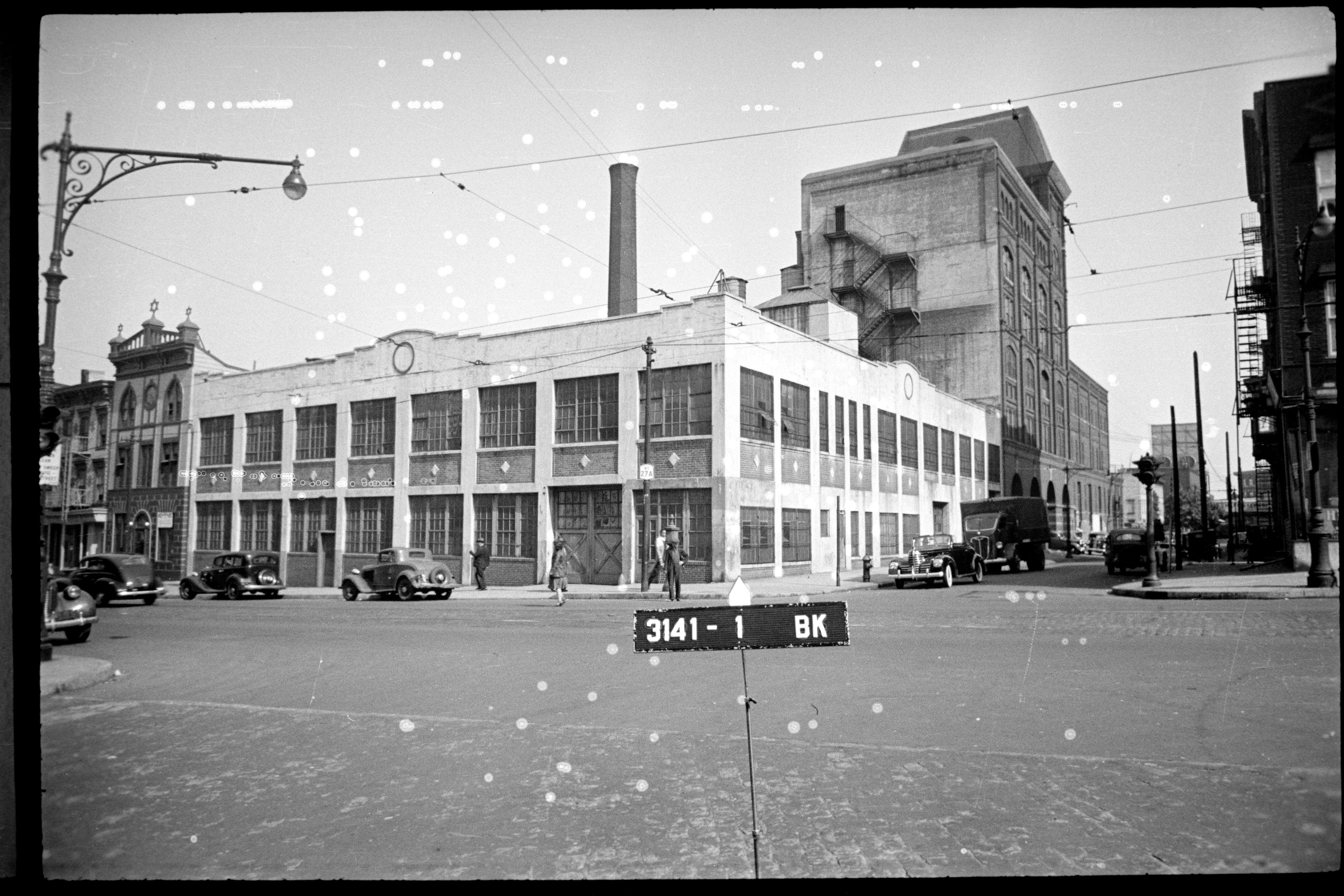
In the popular imagination, the summer of 1977 was New York’s darkest hour. Amidst an active serial killer and a federal government that preferred the city drop dead, the lights went out in New York on July 13th. The epicenter of the blackout chaos was Broadway, the main thoroughfare in Bushwick, then a relatively obscure Brooklyn neighborhood bordering Queens.
Before, Bushwick had seldom appeared in national media. Then, the entire nation began to associate Bushwick with inner-city decline. Its association with urban blight was broadcast by Associated Press across the nation, reaching as far as Fort Meyers and Idaho.
Countless articles at the time cited white flight, immigrants without meaningful roots in the community, or the failures of local groups to improve life in the neighborhood as the cause of the chaos in the area during the blackout. Like much of New York, the industrial Northeast and Midwest, Bushwick wrestled with a simultaneous influx of migration, particularly from Puerto Rico, but also many African-Americans from the South, while its housing stock fell into disrepair, its white tax base evacuated en masse, and most importantly, its industrial jobs vanished.

Before the ’70s, the dominant industry in Bushwick was brewing, particularly the low-ABV lagers associated with the German-Americans who had settled there in the prior century. Back then, Bushwick was home to “Brewer’s Row,” where, at its height, brewers there produced approximately ten percent of all beer consumed in the U.S. The industry retained a significant presence in the neighborhood well into the 1950s, with its final vestiges holding on as far as the late 1970s.
The industry’s final breaths, particularly those last twenty years on life support, are worth exploring. From the 1950s on, the brewing industry in Brooklyn provides a valuable insight into what happened locally during the demise of mid-sized, inner-city manufacturing and other blue-collar industries.
These ripple effects are broadly understood: many of us know what the Rust Belt is. But only when examined at the local level does it become clear to what extent this larger change in market principles, coupled with the rise of suburbanization and waves of cross-country mass migration, altered once thriving communities. While deindustrialization’s effects on the working class within inner cities are well documented, there is value in examining Bushwick itself and the decay of its symbiotic relationship with medium-capacity brewers in the era just before it represented blight in Brooklyn as an example of what deindustrialization wrought on the neighborhood level.
This mirrors a hypothesis found in sociologist William Julius Wilson’s 1996 book When Work Disappears: “The disappearance of work and the consequences of that disappearance for both social and cultural life are the central problems in the inner city.” The exodus of Bushwick’s brewers is characteristic of a larger shift in social and cultural prosperity, once so closely intertwined with the neighborhood’s employers, and how damaging their exodus was.


Bushwick in the late 19th century was a hub for newly minted German-Americans applying their affinity for crafting lager. The late 19th century saw an incredible boom in brewers, including Schaefer’s, Trommer’s, Ulmer’s, and Rheingold’s. Their success was apparent in the numerous estates that sprang up on Bushwick Avenue and nearby, some of which still stand out today among the area’s three-story walkups. While the start of Prohibition in 1920 almost buried the entire industry, many of the area’s brewers clung on through legal loopholes, like producing near-beer, or by skirting the laws through dealing with bootleggers.
A bigger threat to the industry came on the heels of the Brooklyn Brewer’s strike of 1949. The workers demanded pay increases, shorter work weeks, pension plans, and new stipulations that improved the work undertaken by delivery drivers. After picketing for eighty-one days, they were eventually granted many of their demands.

Nevertheless, the strikers’ victory was short-lived. Larger corporations began purchasing the breweries while their profit margins slimmed. Rheingold was bought out by PepsiCo, who quickly decided that brewing beer needed to be more profitable to justify the costs. Others sought prosperity outside the city, where land was inexpensive and Right to Work laws made union solidarity less likely, and capacity could be scaled exponentially. Such was the case for Schlitz too, which discovered that automation at its North Carolina plant made it cheaper to ship beer to New York, rather than brewing it in Brooklyn.
Amid this transition, the industry remained deeply involved in community efforts. Per local news reports, Rheingold funded an “automatic power sweeper” and a worker they paid overtime to clean litter in the neighborhood every Saturday.1 Lieberman Brewery encouraged employee participation in local blood drives. Rheingold also sponsored the “Rheingold League” in the fall of 1975, a softball tournament that pitted over twenty teams represented by their housing projects across New York City against one another at Chelsea Park. Thousands attended, including Mayor Abraham Beame. The final game pitted Rheingold’s hometown heroes, the Bushwick Houses, against the Bronx’s Betances Houses, with the former winning with a final score of 20-16.2
Despite the Rheingold League’s resounding success, the inaugural tournament would be its last. Rheingold closed just over a year later.3 Given its position as effectively the last holdout of Bushwick’s brewery legacy, all the breweries had closed shop.
Besides community efforts to ingratiate themselves locally, the breweries provided meaningful public spaces to a neighborhood that lacked the kinds of public works projects that were common in the more affluent City. An account of what the old Trommer’s Brewery, located at Bushwick Avenue and Conway Street, once represented appears in the Brooklyn Daily Eagle in 1951: “The small-town placidity of Bushwick Avenue was a far cry from that busy street we know today… In those good old days, a brewery was more than a place for making and bottling beer. It was a meeting place for fun, with dancing, dining and even bowling. There are probably many old Brooklynites who remember drinking Trommer’s Augustiner Double Brew and Pilsner Double Brew at the old hotel.”4


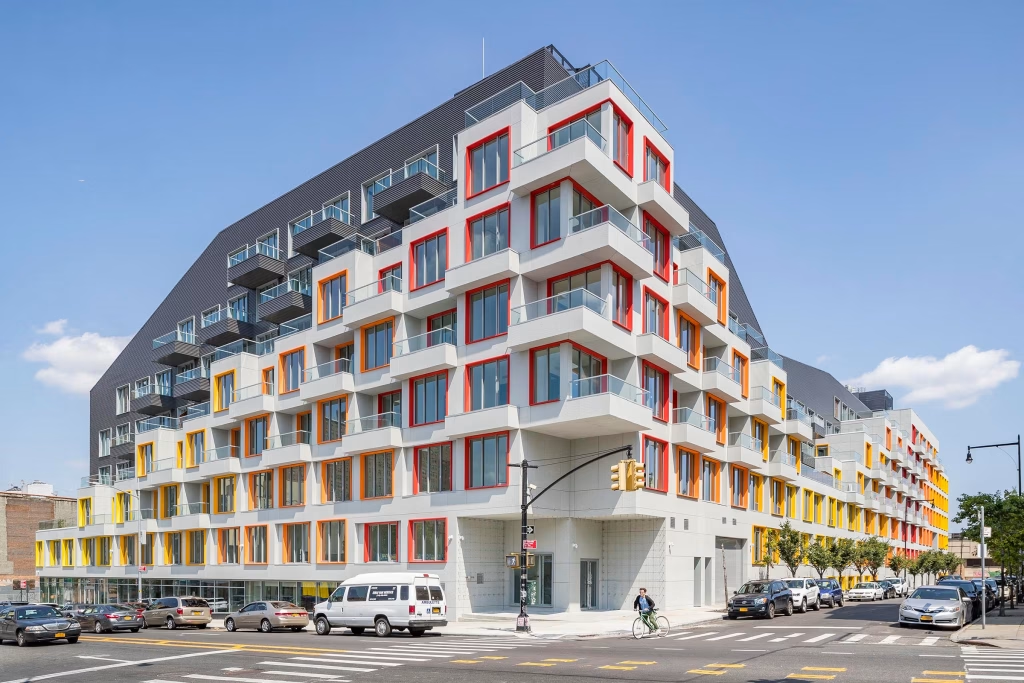
The blocks where Trommer’s and the other brewers were became distressingly bleak once they closed. The Rheingold Brewery on Bushwick Avenue and Montieth Street was a half-empty, overgrown parking lot from 1977 until 2015, when it became the Rheingold, a colorful tower of upscale housing that takes its name from its more productive past. Similarly, the Trommers Brewery, which included a beer garden, restaurant, and hotel at the intersection of Bushwick Avenue and Conway Street, became a parking lot with a drive-thru Burger King, a gas station, and a Wash-N-Lube car wash soon after its closure in 1956.5 The elevated Fulton Line that once connected to the hub at Broadway Junction6, allowing commuters to exit right at the foot of the complex was similarly dismantled.
Nowadays, despite the site being less than a block from the station, it feels like a world apart. The fate of other breweries was much the same. Even the ones that dodged the wrecking ball sat unoccupied for years until gentrification remarketed the idea of living in neglected industrial spaces. The role they once served as third spaces and community hubs, however, has yet to be reinvented. This outcome further fueled the neighborhood’s feeling of destitution that prevailed leading up to the blackout and beyond through much of the rest of the twentieth century.
The disappearance of the brewing industry accelerated a period of already rapid urban decline in Bushwick. The swift demise of the area’s celebrated blue-collar industry at the hands of late capitalism should also be included as part of the narrative when using Bushwick as a lens for understanding midcentury urban decay in American cities.
A version of this story was originally published in November, 2024 at Half-Baked History. Archival photos courtesy NYC Department of Records as organized by 1940s NYC.
Brendan Davey is a Brooklyn transplant going on his 15th year and a student of history with a deep love for uncovering the hidden past. He is also a union delegate for the Professional Staff Congress and his writing has also appeared in Streetsblog. You can find him on BlueSky or on his Patreon.
- “Brewery Aids Litter Fight,” New York Amsterdam News (1962-); Apr 26, 1969, pg. 29 ↩︎
- “Rheingold League A Big Success” New York Amsterdam News (1962-); Oct 29, 1975, pg. ↩︎
- Downard, William L. (1980). Dictionary of the History of the American Brewing and Distilling Industries. Westport, CT: Greenwood Press, p. 159. ↩︎
- “Old Timers. Brooklyn History by its Makers.” The Brooklyn Daily Eagle (Brooklyn, New York), Nov 18, 1951, pg. 29. ↩︎
- It’s since become a Popeyes. What progress! ↩︎
- “I decided to go to Manhattan Junction, which is what they called Broadway Junction in those days.” ↩︎



Leave a Reply